It’s time to snag the hottest electronics for friends and family before the holiday rush, and the global chip shortage, make it tougher to score what’s on everyone’s wish list.
If it’s a tech toy you want to give, there’s no shortage of sleek screens, wearable gadgets, and smart home-related present options that are sure to bring a smile to someone’s face. But be forewarned, there’ll be some empty shelves and you’ll pay more this year as AI data centres have been scooping up “memory inventory.” Wise advice: Take advantage of pre-holidays sales—Black Friday (Nov. 27) and Cyber Monday (Nov. 30).
PC perfection
Is there a new laptop in someone’s future? The ASUS Zenbook A16 ($1699) is a masterclass in ultra-portable design. It packs a massive 16-inch workspace into an impossibly light 1.2kg frame—making it lighter than most 14-inch laptops.
Exclusive to Zenbooks, its “Ceraluminum” chassis is a high-tech fusion of ceramic and aerospace-grade aluminum that resists scratches and fingerprints while maintaining rigorous military-grade durability.
Under the hood, Qualcomm’s ground-breaking Snapdragon X2 Elite Extreme processor delivers jaw-dropping, silent speed that rivals Apple’s M-series, paired with a massive 80 TOPS NPU for advanced AI tasks.
Everything pops on its glorious, buttery-smooth 120 Hz 3K Lumina OLED touchscreen display, backed by a 21-hour battery life that lets you leave the charger at home. Could be worth switching to in 2027!
Project yourself
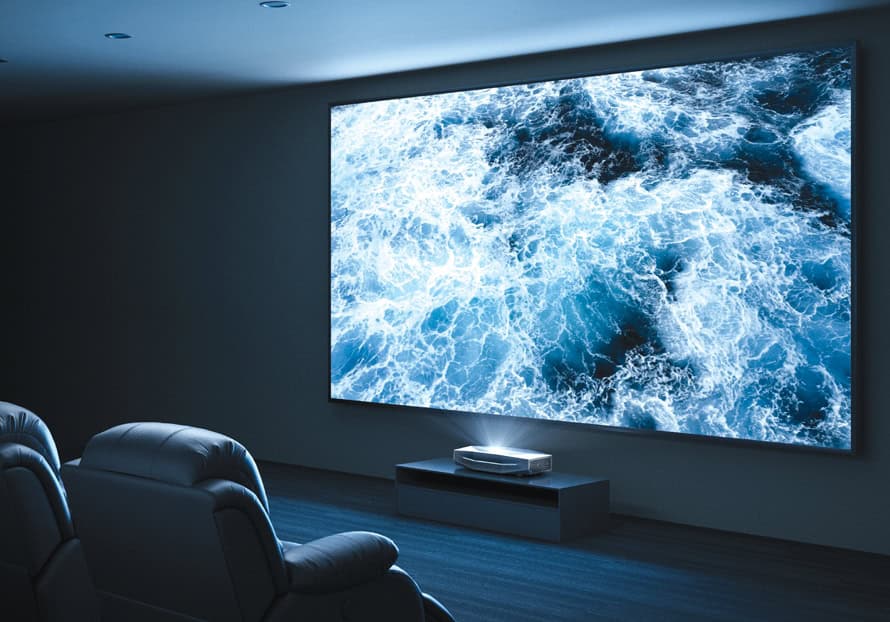
While it’s a brand you may not be too familiar with, the AWOL VISION Aetherion Max Projector ($5269) is one of—if not the—world’s sharpest 4K triple-laser ultra short throw UST projection system.
Delivering a crisp UltraHD picture up to 200 inches, this new projector is built on a proprietary precision engine dubbed PixelLock—an integrated optical, mechanical and digital alignment system—resulting in exceptional colour, high brightness (3,300 ISO lumens), and 6000:1 native contrast for super deep blacks.
You can also expect low-latency gaming capabilities at just 1-millisecond, with a 240Hz refresh rate. Wow.
You’re so meta
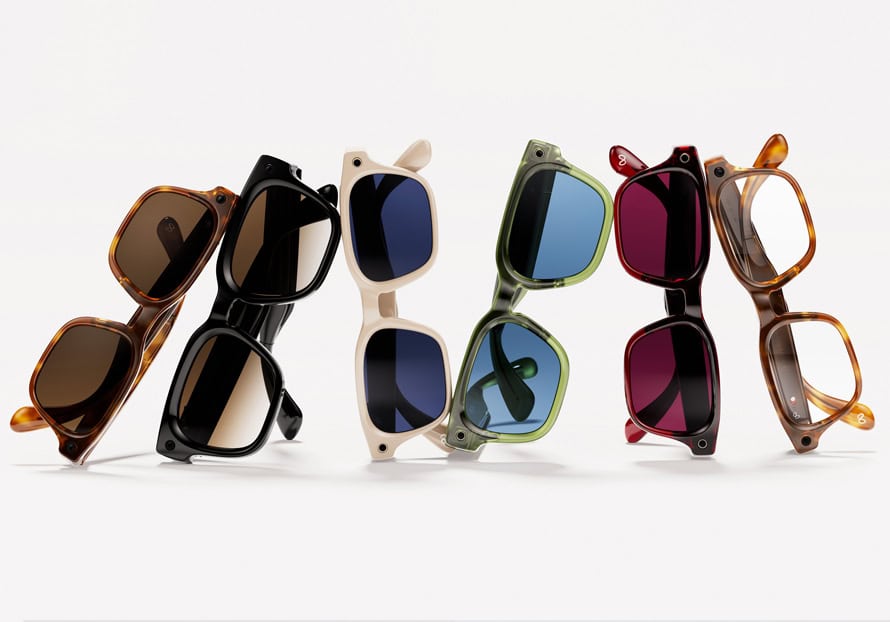
Launched at the start of the summer, the latest Meta Glasses (from $409) fuse fashion with functionality.
Powered by the company’s new proprietary AI model out of its Superintelligence Labs, these voice-enabled glasses (and sunglasses) offer smarter live translation across 14 languages, turn-by-turn navigation, and real-time answers to your questions like “what’s the best coffee place near here?” after landing in a new city.
An ultra-wide 12-megapixel camera shoots crisp photos and 3K video, on-demand—perfect for capturing life’s adventures, hands-free, from your point of view. (POV). Or ask AI to identify something you’re looking at, like a menu in another language, a rare dog breed, exotic car or historical building and you’ll be a sudden expert.
Other features include an upgraded 6-microphone array, open-ear speakers, and 8 hours of battery life (extended to 48 hours via a folding case, included).
These Meta Glasses are now available in 26 design variations across three frames: Adventurer, Fury, and a Kylie Jenner “Starfire” edition featuring her AI-cloned voice.
Screen dream
Time to upgrade your television? TCL’s QM8L televisions are picture perfect. With four sizes ranging from 65 inches ($1999) to 98 inches ($5999), these stunning SQD Mini-LED 4K TVs feature “Super Quantum Dots” that deliver an incredible 6,000 nits of peak brightness and with colour so vibrant they pop off the screen. It also features an anti-reflective coating, so you can watch content any time of the day, even near windows, without the risk of glare.

For gamers, a 144 Hertz native refresh rate means silky smooth action, especially for first-person shooters and sports/racing titles, along with elite sound from Audio by Bang & Olufsen that includes integrated subwoofers, surround channels, and a centre channel.
And it’s an AI-powered smart Google TV with Gemini.
Retro rocks
What’s old is new again. Created by former Apple engineers and designers, Ruka Studio’s TD-1 Vertical Turntable ($1399) is a high-end belt-drive record player that can be mounted to a wall with the included rubber-coated mount with built-in level (and magnetically clicks into place).
Its minimalist look is complimented by an aluminum-milled body and features mechanical knobs and switches for playback and electronic speed controls.
While the TD-1 offers wired inputs to connect to a traditional sound system, built-in Bluetooth means it can wirelessly beam music to compatible speakers or soundbar.

Sounding off
Speaking of audio, the Sony WH-1000XM6 over-ear headphones ($599) stand out not just for its incredibly clarity but resurrecting a highly requested feature: a fully foldable design paired with a 25% smaller, one-handed magnetic case.
Inside, the blazing-fast QN3 processor runs seven times quicker than previous iterations and upgraded array of 12 microphones—all to help deliver multiple award-winning active noise cancellation that effortlessly silences jet engines and ambient chatter.
Especially for high-resolution music—but also for podcasts, audiobooks or while enjoying video and gaming—audio is tuned alongside elite mastering engineers, boasting deeper, tighter sub-bass and crisp instrument separation.
Best of all, you can now listen while charging via USB-C.
The XM6’s deliver 30 hours of battery life, ultra-clear AI beamforming calls, and Bluetooth 5.3 LE audio.
Talk to me
The traditional voice recorder has long been a static tool, but the Plaud Note Pro ($259) transforms raw audio into an automated pipeline for digital productivity.
Measuring just a fraction of a centimetre thick, this credit-card-sized device snaps directly to your phone via MagSafe.
A single physical switch bypasses smartphone apps entirely, letting you instantly (and securely) record ambient meetings or capture phone calls through internal vibration conduction.
Once recorded, the system operates as an agnostic large language model aggregator. The companion app routes your audio through leading engines—like ChatGPT-5.5, Google Gemini Pro, and Claude Sonnet—to transcribe speech in over 112 languages.
Rather than delivering a dense wall of text, specialized templates instantly distill hours of dialogue into structured summaries, mind maps, and actionable task lists.
This “Pro” version includes a free black magnetic case, 300 minutes a month of AI transcription, and access to Plaud Desktop on a computer.
Walk the line
All I want for Christmas is a…bionic suit? The Hypershell X Ultra ($2499) is a lightweight (1.8kg) “exoskeleton” that helps assist walkers, joggers, hikers and backpackers better tackle the Great Outdoors.
Made from durable and weather-resistant carbon fibre and titanium, strap it around your waist like a belt and secure the straps to the front of your quads (above your knees). Press the button on the side of the device and is its 1000-watt motor and AI-driven motion engine acts like an e-bike for your legs. It predicts your movement signature in milliseconds to effortlessly match your stride. There are varying levels of support, too.
Designed for the outdoorsy crowd, the XUltra promises to cuts physical exertion by roughly 39%, and can offset up to 30kg of carried weight.
 ‘Foldables’ offer functionality and fun
Foldable phones give you the best of two worlds: when closed, they’re a pocket-sized device for calls and texts, snapping images and glancing at notifications.
Open up the bendable display for mini tablet, of sorts, for reading ebooks, watching videos, or playing games. Its also a great tool for increased productivity when you’re multitasking (like reading your email
on one half of the screen with a web browser open on the other side).
There are multiple devices to choose from:
• Apple is launching its first foldable iPhone on October 23, 2026. It’s called the iPhone Duo, it’s a passport-sized 5.4 inch device when closed—like a shorter and fatter iPhone—but it opens like a book to reveal a 7.6 inch Super Retina XDR display—the largest display on an iPhone (almost as large as an iPad mini). When opened, it’s also the thinnest iPhone to date, at 5.2 mm thick. Prices start at $2,999 for the 256GB model (also available in 512GB, 1TB and 2TB).
• Samsung bowed two awesome foldable devices this year. Starting at $2399, the Galaxy Z Fold8 is shaped like a passport but opens like a book to reveal a 7.6-inch viewing area. As the lightest Galaxy Fold to date at 201 grams, Samsung says this device was designed for consuming content, aided by its anti-reflective glass coating and up to 3000 nits of brightness for viewing outside (even in direct sunshine). Starting at $2699, the Galaxy Z Fold8 Ultra was built for maximum productivity and photography, thanks to its advanced specs. The camera features three lenses on the back: a 200-megapixel main camera (with High Dynamic Range for added contrast, brightness and colour), a 50-megapixel ultrawide lens, and 10-megapixel telephoto lens. There are also two selfie cameras: one on the outer “cover” display” and when opened, another cam on the expanded and antireflective screen. The slimmest Galaxy Fold to date.
• Google also upgraded its flagship foldable for 2026. The Google Pixel 11 Pro Fold (from $2499) is lighter, thinner, and three times more durable than last year’s model. It features a brilliant 8-inch inner screen and a 6.5-inch outer display that are 20% brighter. Powered by the new Tensor G6 chip, it brings advanced Gemini AI and a 48MP camera with better low-light performance. A unique “HiLight” LED glows for notifications, which is a handy addition.
For the past 30 years, Marc Saltzman has been a recognized expert in consumer electronics, business tech, and automotive trends. Marc is a keynote speaker across North America and hosts the weekly Tech It Out podcast. You can follow Marc on X @ marc_saltzman.
Photos: ASUS. AWOL Vision. Sony. TCL Canada. Samsung.